

K12 Movie Guides
The Sweet Hereafter Movie Guide Questions & Worksheet
The Sweet Hereafter Movie Guide Questions & Worksheet
Couldn't load pickup availability
Classroom Use at a Glance
No-prep movie guide for The Sweet Hereafter with time-stamped questions, discussion prompts, answer keys, and a self-grading Google Forms quiz.
- Resource type
- Film Quiz & Movie Guide
- Grade band
- Grades 9–12
- Rating
- R
- Runtime
- 112 minutes
- Time required
- 3–5 Class Periods
- Prep level
- No-Prep
- Subject
- ELA
- Classroom use
- Full Film Lesson Movie Day Accountability Discussion Evidence-Based Writing Film Analysis Digital Assignment
- Includes
- Student Worksheet Time-Stamped Questions End-of-Film Questions Multiple-Choice Quiz Google Forms Quiz Teacher Guide Answer Key Discussion Questions Lesson Plans Admin Movie Request / Permission Slip
- Tech format
- Printable Worksheet Google Slides / PPTX Google Forms Quiz Google Classroom Ready
Make The Sweet Hereafter easier to teach with a no-prep movie guide focused on grief, testimony, trauma, legal pressure, memory, and the way a community lives after shared loss.
This resource helps students follow Mitchell Stevens, Dolores, Nicole, Billy, and the town as a school-bus tragedy becomes a story about grief, blame, testimony, and interpretation. The questions keep students grounded in dialogue, narrative structure, the Pied Piper motif, and witness accounts instead of treating the film as a simple legal drama.
Use this movie guide for Grades 11–12 ELA, film study, media literacy, senior discussion, sub plans, or trauma-sensitive literary analysis. Students analyze nonlinear storytelling, moral ambiguity, community grief, testimony, and the way memory can be both necessary and unstable.
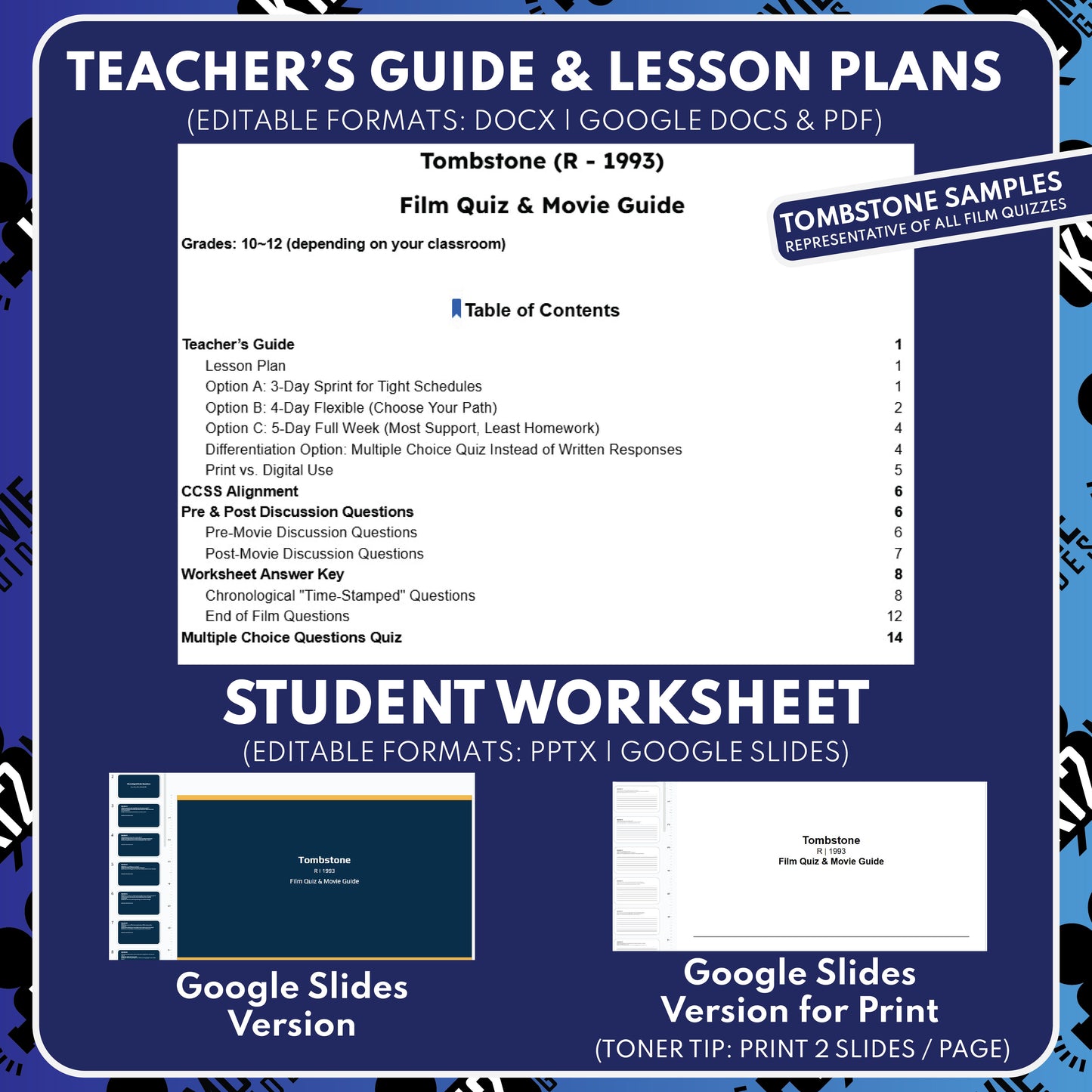
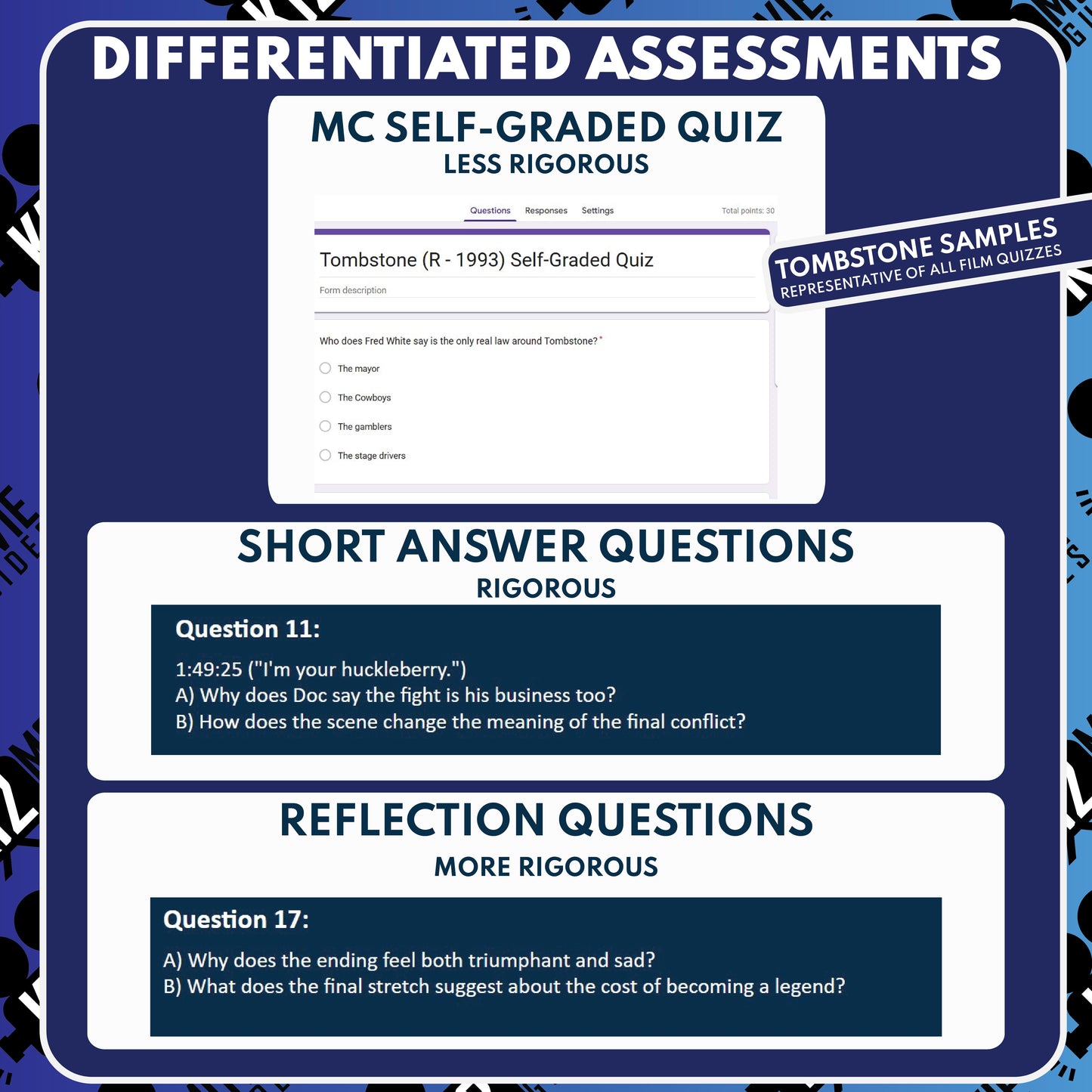
The sample preview images attached to this listing are from Tombstone Film Quiz and are representative of the question format and classroom-ready layout included in this Film Quiz.
Will this lesson meet your needs?
Download one first for FREE Tombstone Film Quiz
Note: The sample thumbnails for this product are from Tombstone Film Quiz but they are representative of what is included in this Film Quiz.
Classroom Use at a Glance
- Best for: Grades 11–12 ELA, film study, media literacy, advanced literary-analysis units, and discussion-based classes
- Use cases: full-film lesson, sub plan, nonlinear-narrative study, motif analysis, testimony discussion, community-grief unit, or enrichment
- Key themes: grief, testimony, trauma, memory, blame, legal pressure, community loss, and moral ambiguity
- Skills addressed: nonlinear narrative, motif analysis, dialogue evidence, character perspective, testimony analysis, vocabulary in context, theme analysis, and written response
- Differentiation: students can complete the written movie guide or use the 30-question multiple-choice quiz as an alternate assessment
- Time needed: movie runtime plus about 45–60 minutes for pauses, discussion, and written work
- Formats included: printable worksheet, Google Slides/PPTX, Google Forms quiz, teacher guide, answer keys, CCSS alignment, and permission slip materials
Guidance & Summary
The Sweet Hereafter (1997) is rated R. Teachers should preview the film and follow school policy for movie approval. Expect mature grief and trauma themes, disturbing accident material, sexual-abuse implications, adult language, and emotionally intense material.
After a school-bus accident devastates a small town, lawyer Mitchell Stevens arrives to build a lawsuit while survivors and families struggle with memory, guilt, anger, and silence. Nicole’s testimony, Dolores’s account, Billy’s resistance, and the Pied Piper story all shape the film’s moral complexity.
The film resists easy blame or simple closure, asking students to consider how stories are told after trauma and what it means for a community to continue living in “the sweet hereafter.”
See more details at the IMDb here https://www.imdb.com/title/tt0120255/
Why Teachers Use This Movie Guide
This guide gives students a clear structure for watching a complex film with purpose. Instead of getting lost in the nonlinear timeline, students track testimony, motif, memory, and repeated images across the whole film.
The questions work well for teachers who want students to discuss trauma, narrative structure, legal pressure, and moral ambiguity using specific scene evidence and sensitive language.
Differentiation Options
The teacher guide includes a written-response path and a multiple-choice quiz path.
Use the written worksheet when students are ready to explain character choices, themes, and scene evidence in more detail. Use the 30-question multiple-choice quiz when students need fewer writing demands, a faster assessment, or a more accessible review option.
Support options include reading questions aloud, offering small-group testing, allowing extended time, or having students explain selected answers orally.
What’s Included
Student Materials
- Rigorous Short Answer Questions (chronological, time-stamped)
- End-of-Film Reflection & Challenge Questions
- 30 Question MC Quiz (Self-Graded Google Forms)
Teacher Materials
- Teacher’s guide and lesson plan
- Worksheet & MC Quiz answer key
- CCSS alignment
- Pre- and post-movie discussion questions
- 3-day, 4-day, and 5-day pacing options
- Admin movie request and parent/guardian permission slip materials
Digital & Print Options
- All materials have Google Classroom and Print Options
Flexible Lesson Pacing
- 3-Day Sprint: best for tight schedules or classes that do better with smooth viewing and discussion after the film
- 4-Day Flexible Plan: best for teachers who want either discussion before and after the film or selected pause-and-write checkpoints during viewing
- 5-Day Full Week: best for classes that need more guided discussion and writing time in class, with less take-home work
The teacher guide includes these pacing paths, plus options for written responses or the multiple-choice quiz as an alternate assessment.
Skills Addressed
- Nonlinear narrative
- Motif analysis
- Testimony analysis
- Character perspective
- Memory and trauma discussion
- Vocabulary in context
- Whole-film theme support
- Media literacy
- Speaking and listening discussion
- Evidence-based written response
The guide’s CCSS alignment connects vocabulary, evidence, theme, character development, discussion, and supported interpretation.
Frequently Asked Questions
Can I use this as a sub plan?
Yes. The movie guide includes structured questions, answer keys, and flexible pacing options, so it can work as a planned film lesson or a reliable sub plan.
Does this include a digital version?
Yes. The guide includes Google Slides/PPTX materials and a Google Forms version of the multiple-choice quiz.
Is there an answer key?
Yes. The teacher guide includes worksheet answers and the multiple-choice quiz answer key.
How long does the resource take?
Plan for the movie runtime plus about 45–60 minutes for questions, discussion, and written work.
How is this differentiated?
Students can complete the written-response movie guide or use the 30-question multiple-choice quiz as an alternate assessment with more accessible language.
Share