
K12 Movie Guides
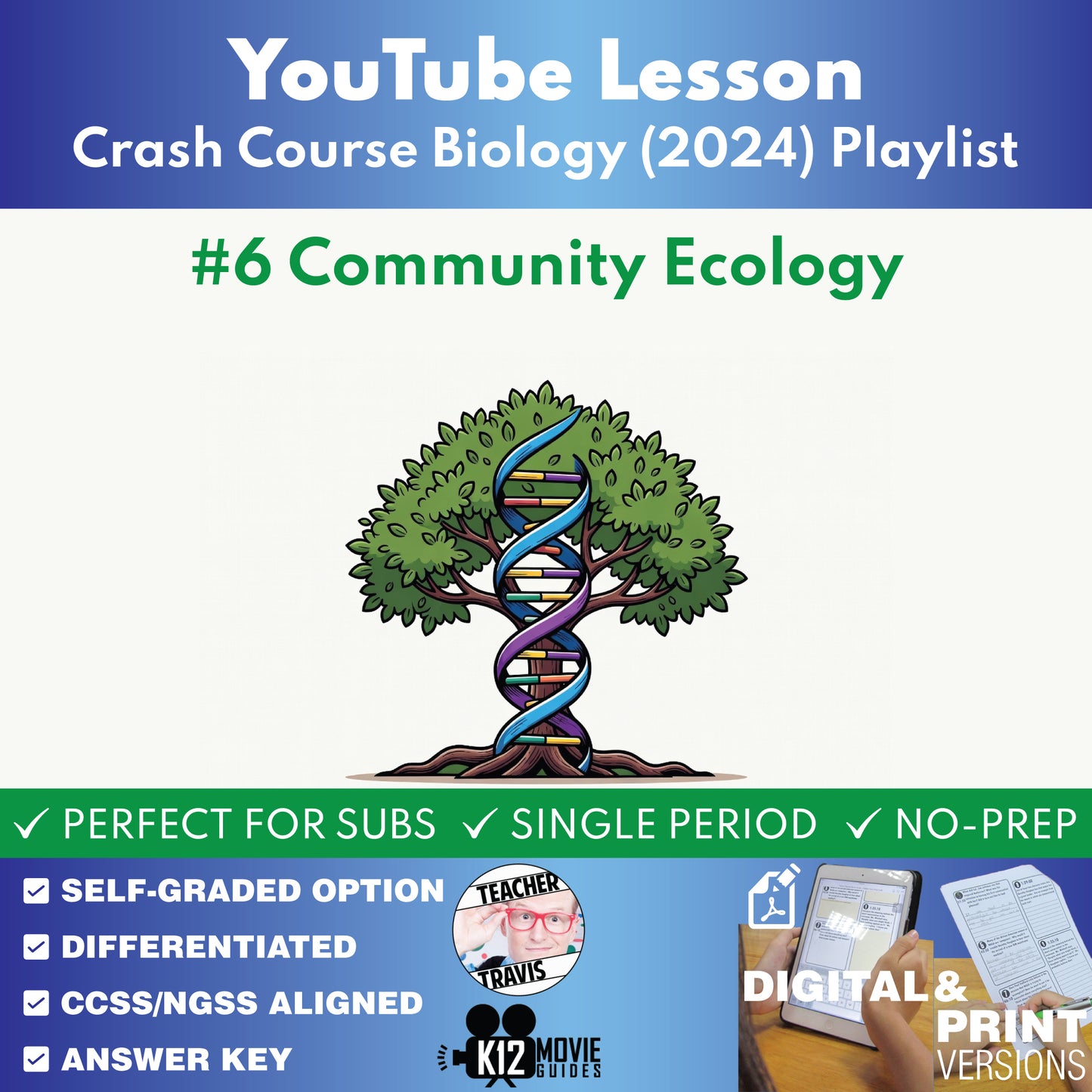
Community Ecology #6 | Crash Course Biology (2024) YouTube Video Lesson
Community Ecology #6 | Crash Course Biology (2024) YouTube Video Lesson
Couldn't load pickup availability
Classroom Use at a Glance
No-prep Crash Course Biology YouTube video lesson for Grades 8-12. Focuses on competition, predation, mutualism, parasitism, niches, and species interactions. Includes vocabulary, time-stamped questions, end-of-video questions, a 10-question quiz, answer keys, Google Classroom-ready files, and NGSS/CCSS science literacy support.
- Resource type
- YouTube Video Lesson
- Grade band
- Grades 6–8 Grades 9–12
- Rating
- Not Rated
- Runtime
- 10–15 minutes
- Time required
- 20–45 minutes
- Prep level
- No-Prep
- Subject
- Science
- Classroom use
- Sub plans Guided video lesson Biology review Science literacy Google Classroom assignment Flipped lesson Absent-student makeup work
- Includes
- Teacher guide Student worksheet Answer key Vocabulary questions Time-stamped short-answer questions End-of-video questions 10-question multiple-choice quiz Google Forms quiz Google Slides/PPTX worksheet Start Here Google Classroom PDF
- Tech format
- Printable PDF Google Slides PowerPoint/PPTX Google Forms Google Docs Google Classroom Ready ZIP File
Make Community Ecology: Interspecies Interactions easier to teach with a no-prep YouTube video lesson focused on community ecology, competition, predation, mutualism.
This lesson focuses on the relationships among species in ecological communities. Students analyze competition, predation, mutualism, parasitism, and other interactions that shape survival, population patterns, and ecosystem stability.
Use this video guide for Grades 8-12 biology, environmental science, NGSS review, science literacy, sub plans, or discussion-based classes. Use this lesson during ecology, biodiversity, evolution, or environmental science units. The questions support students who need practice explaining relationships among organisms and using precise evidence to describe how one species can affect another.
Use this lesson with the Crash Course Biology Playlist.
Will this meet my needs? Where's the preview? Try this first lesson "Introduction to Biology" 100% FREE!
Guidance & Summary
Community Ecology: Interspecies Interactions: Crash Course Biology #6 is a short educational YouTube lesson designed to help students build biology knowledge through clear explanations, examples, vocabulary, and evidence-based questions.
This lesson focuses on the relationships among species in ecological communities. Students analyze competition, predation, mutualism, parasitism, and other interactions that shape survival, population patterns, and ecosystem stability.
The teacher guide aligns the lesson to MS-LS2 / HS-LS2 ecosystem interaction support and crosscutting concepts of cause and effect. The questions are built to keep students accountable during viewing while supporting science vocabulary, evidence, and concise written explanation.
Why Teachers Use This Video Lesson
This guide gives students a clear structure for watching the video with purpose. Instead of passively viewing a fast-paced science video, students track important terms, examples, cause-and-effect relationships, and key explanations.
The questions work well for teachers who want students to use specific video evidence while learning about community ecology, competition, predation, mutualism, parasitism.
Differentiation Options
The teacher guide includes a written-response path and a multiple-choice quiz path.
- Use the written worksheet when students are ready to explain vocabulary, evidence, systems, cause and effect, and science concepts in more detail. Use the 10-question multiple-choice quiz when students need fewer writing demands, a faster assessment, or a more accessible review option.
- Support options include reading questions aloud, offering small-group testing, allowing extended time, previewing vocabulary, or having students explain selected answers orally.
What's Included
Student Materials
- Rigorous short-answer questions (chronological, time-stamped)
- End-of-video reflection and challenge questions
- 10-question multiple-choice quiz (Google Forms compatible)
Teacher Materials
- Teacher's guide and lesson plan
- Worksheet and MC quiz answer key
- NGSS and CCSS science literacy alignment
- Pre- and post-viewing discussion questions
- 20-minute, 30-minute, and 45-minute pacing options
Digital & Print Options
- All materials include Google Classroom and print options
Flexible Lesson Pacing
- 20-Minute Quick Clip: best for tight schedules, bell-ringers, early finisher blocks, or short sub plans
- 30-Minute Flexible Mini-Lesson: best for teachers who want the full short-answer guide while keeping the lesson compact
- 45-Minute Full Mini-Lesson: best for classes that need guided discussion, vocabulary support, and in-class writing time
- The teacher guide includes these pacing paths, plus options for written responses or the multiple-choice quiz as an alternate assessment.
Skills Addressed
- Classify species interactions
- Explain ecological relationships
- Use cause-and-effect reasoning
- Apply niche vocabulary
- Analyze how interactions affect communities
- Vocabulary in context
- Evidence-based written response
- Science literacy and academic discussion
- The guide's standards alignment connects vocabulary, evidence, discussion, and supported interpretation to MS-LS2 / HS-LS2 ecosystem interaction support and crosscutting concepts of cause and effect.
Frequently Asked Questions
Can I use this as a sub plan?
Yes. The video guide includes structured questions, answer keys, flexible pacing options, and a multiple-choice quiz, so it can work as a planned science lesson or a reliable sub plan.
Does this include a digital version?
Yes. The resource includes Google Classroom-friendly materials, including digital worksheet and quiz options.
Is there an answer key?
Yes. The teacher guide includes worksheet answers and the multiple-choice quiz answer key.
How long does the resource take?
Plan for the video runtime plus about 20-45 minutes for questions, discussion, vocabulary, and written work.
How is this differentiated?
Students can complete the written-response video guide or use the 10-question multiple-choice quiz as an alternate assessment with more accessible language.
Share