

K12 Movie Guides
City Lights Movie Guide Questions & Worksheet
City Lights Movie Guide Questions & Worksheet
Couldn't load pickup availability
Classroom Use at a Glance
No-prep movie guide for City Lights with time-stamped questions, discussion prompts, answer keys, and a self-grading Google Forms quiz.
- Resource type
- Film Quiz & Movie Guide
- Grade band
- Grades 6–8 Grades 9–12
- Rating
- G
- Runtime
- 87 minutes
- Time required
- 3–5 Class Periods
- Prep level
- No-Prep
- Subject
- ELA
- Classroom use
- Full Film Lesson Movie Day Accountability Discussion Evidence-Based Writing Film Analysis Digital Assignment
- Includes
- Student Worksheet Time-Stamped Questions End-of-Film Questions Multiple-Choice Quiz Google Forms Quiz Teacher Guide Answer Key Discussion Questions Lesson Plans Admin Movie Request / Permission Slip
- Tech format
- Printable Worksheet Google Slides / PPTX Google Forms Quiz Google Classroom Ready
Make City Lights easier to teach with a no-prep movie guide focused on compassion, silent-film comedy, class difference, sacrifice, and visual storytelling.
This resource helps students follow the Tramp as he tries to help a blind flower girl while repeatedly crossing paths with a wealthy man whose friendship changes with circumstance. The questions keep students grounded in visual action, comic timing, character choices, and scene evidence instead of treating the film as simple slapstick.
Use this movie guide for Grades 6–12 ELA, film study, media literacy, sub plans, or discussion-based classes. Students analyze Chaplin’s visual storytelling, the Tramp’s generosity, the flower girl’s hope, and the way comedy and tenderness work together without spoken dialogue.
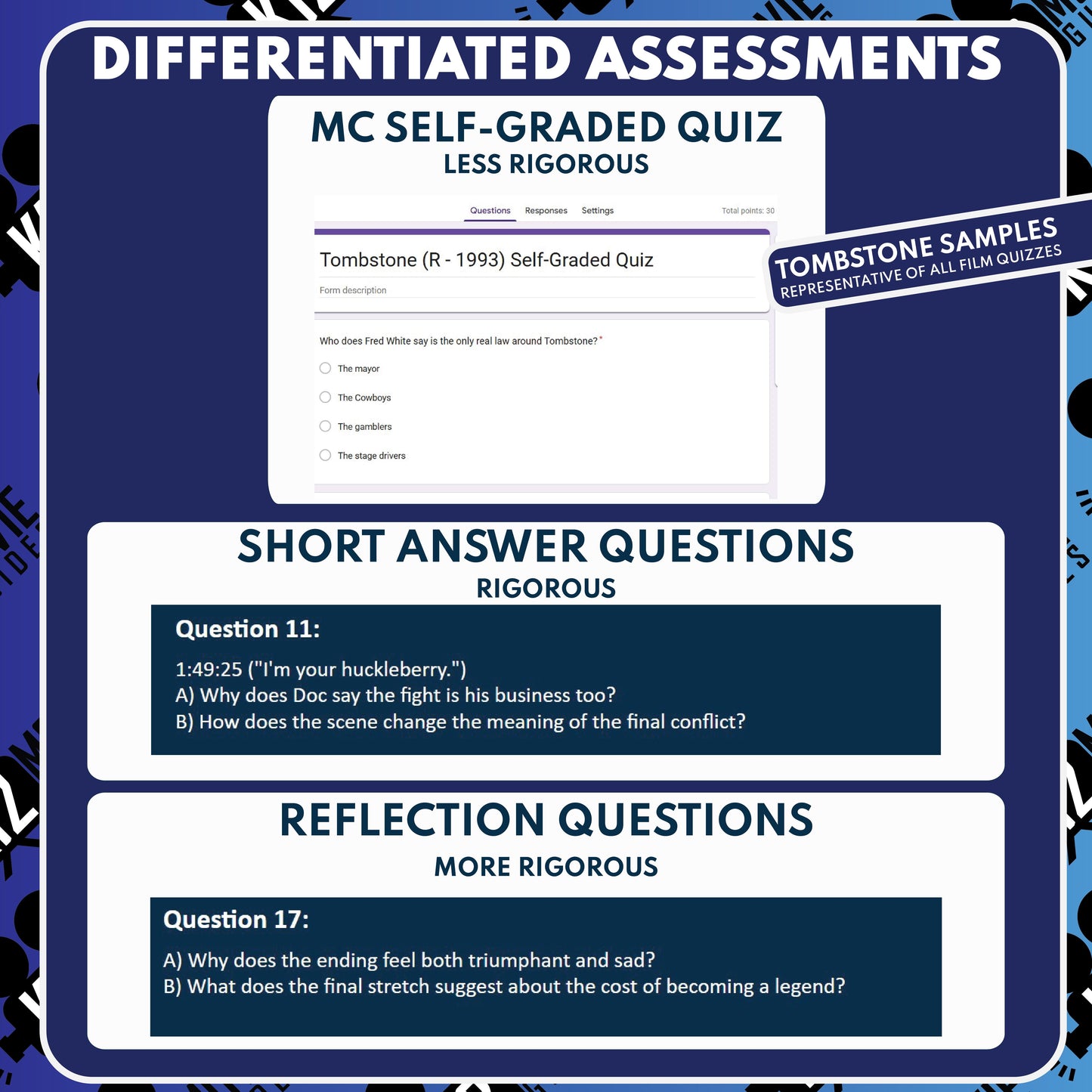
Check the thumbnail images for sample questions to see if this movie guide is suitable for your students.
Will this lesson meet your needs?
Download one first for FREE Tombstone Film Quiz
Note: The sample thumbnails for this product are from Tombstone Film Quiz but they are representative of what is included in this Film Quiz.
Classroom Use at a Glance
- Best for: Grades 6–12 ELA, film study, media literacy, silent-film units, comedy study, and discussion-based classes
- Use cases: full-film lesson, sub plan, silent-film analysis, visual storytelling study, character analysis, theme review, or enrichment
- Key themes: compassion, sacrifice, class difference, dignity, mistaken identity, hope, and generosity
- Skills addressed: visual inference, character motivation, cause and effect, silent-film technique, vocabulary in context, theme analysis, and written response
- Differentiation: students can complete the written movie guide or use the 30-question multiple-choice quiz as an alternate assessment
- Time needed: movie runtime plus about 45–60 minutes for pauses, discussion, and written work
- Formats included: printable worksheet, Google Slides/PPTX, Google Forms quiz, teacher guide, answer keys, CCSS alignment, and permission slip materials
Guidance & Summary
City Lights (1931) is rated G. Teachers should still preview the film and consider whether students are ready for a silent black-and-white film with older pacing, romantic comedy, comic drinking/intoxication, boxing comedy, poverty, and emotional themes.
The Tramp falls in love with a blind flower girl and wants to help her regain her sight, even though he has little money or social power. His comic friendship with an erratic wealthy man repeatedly gives him hope and then removes it.
As the story moves through chance meetings, work attempts, boxing, sacrifice, and mistaken assumptions, the film turns physical comedy into a study of kindness, dignity, and the fear of being truly seen.
See more details at the IMDb here https://www.imdb.com/title/tt0021749/
Why Teachers Use This Movie Guide
This guide gives students a clear structure for watching a silent film with purpose. Instead of passively viewing older comedy, students track how gestures, framing, repeated situations, and visual contrast develop character and theme.
The questions work well for teachers who want students to discuss silent-film technique, compassion, class difference, and why the ending remains powerful using specific film evidence.
Differentiation Options
The teacher guide includes a written-response path and a multiple-choice quiz path.
Use the written worksheet when students are ready to explain character choices, themes, and scene evidence in more detail. Use the 30-question multiple-choice quiz when students need fewer writing demands, a faster assessment, or a more accessible review option.
Support options include reading questions aloud, offering small-group testing, allowing extended time, or having students explain selected answers orally.
What’s Included
Student Materials
- Rigorous Short Answer Questions (chronological, time-stamped)
- End-of-Film Reflection & Challenge Questions
- 30 Question MC Quiz (Self-Graded Google Forms)
Teacher Materials
- Teacher’s guide and lesson plan
- Worksheet & MC Quiz answer key
- CCSS alignment
- Pre- and post-movie discussion questions
- 3-day, 4-day, and 5-day pacing options
- Admin movie request and parent/guardian permission slip materials
Digital & Print Options
- All materials have Google Classroom and Print Options
Flexible Lesson Pacing
- 3-Day Sprint: best for tight schedules or classes that do better with smooth viewing and discussion after the film
- 4-Day Flexible Plan: best for teachers who want either discussion before and after the film or selected pause-and-write checkpoints during viewing
- 5-Day Full Week: best for classes that need more guided discussion and writing time in class, with less take-home work
The teacher guide includes these pacing paths, plus options for written responses or the multiple-choice quiz as an alternate assessment.
Skills Addressed
- Visual inference
- Character motivation
- Cause and effect
- Silent-film technique
- Compassion and class discussion
- Vocabulary in context
- Whole-film theme support
- Media literacy
- Speaking and listening discussion
- Evidence-based written response
The guide’s CCSS alignment connects vocabulary, evidence, theme, character development, discussion, and supported interpretation.
Frequently Asked Questions
Can I use this as a sub plan?
Yes. The movie guide includes structured questions, answer keys, and flexible pacing options, so it can work as a planned film lesson or a reliable sub plan.
Does this include a digital version?
Yes. The guide includes Google Slides/PPTX materials and a Google Forms version of the multiple-choice quiz.
Is there an answer key?
Yes. The teacher guide includes worksheet answers and the multiple-choice quiz answer key.
How long does the resource take?
Plan for the movie runtime plus about 45–60 minutes for questions, discussion, and written work.
How is this differentiated?
Students can complete the written-response movie guide or use the 30-question multiple-choice quiz as an alternate assessment with more accessible language.
DISCLAIMER: This product is an independently created worksheet and question set for classroom commentary and instruction. It is not affiliated with the film's creators or distributors, and it does not include the movie itself. Teachers should preview films for local policy fit.
Share