

K12 Movie Guides
3:10 to Yuma Movie Guide Questions & Worksheet (1957)
3:10 to Yuma Movie Guide Questions & Worksheet (1957)
Couldn't load pickup availability
Classroom Use at a Glance
No-prep movie guide for 3:10 to Yuma with time-stamped questions, discussion prompts, answer keys, and a self-grading Google Forms quiz.
- Resource type
- Film Quiz & Movie Guide
- Grade band
- Grades 6–8 Grades 9–12
- Rating
- Not Rated
- Runtime
- 92 minutes
- Time required
- 3–5 Class Periods
- Prep level
- No-Prep
- Subject
- ELA
- Classroom use
- Full Film Lesson Movie Day Accountability Discussion Evidence-Based Writing Film Analysis Digital Assignment
- Includes
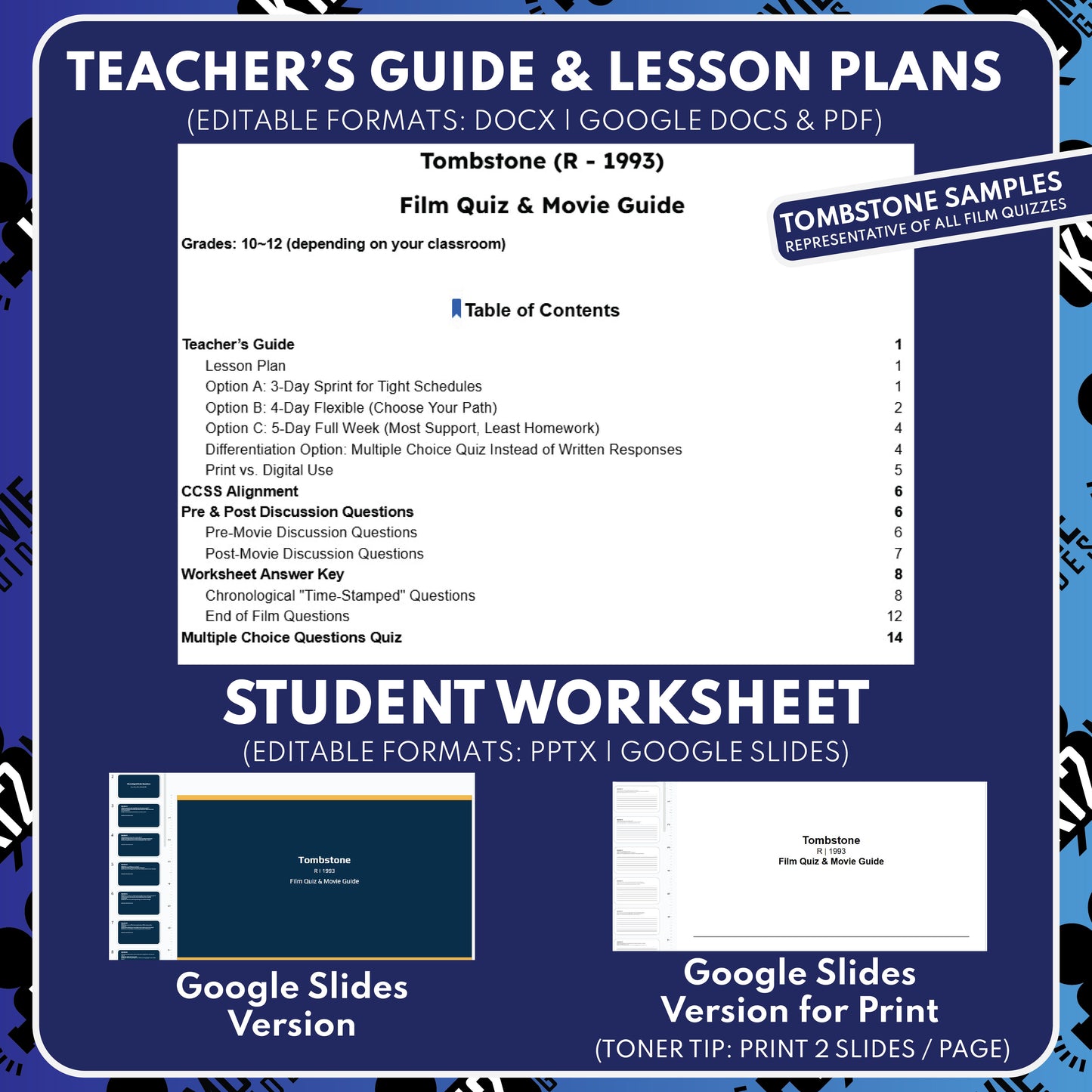
- Student Worksheet Time-Stamped Questions End-of-Film Questions Multiple-Choice Quiz Google Forms Quiz Teacher Guide Answer Key Discussion Questions Lesson Plans Admin Movie Request / Permission Slip
- Tech format
- Printable Worksheet Google Forms Quiz Google Classroom Ready
3:10 to Yuma Movie Guide Questions & Worksheet helps students analyze a tense classic Western about moral courage, financial pressure, temptation, and what justice costs in a struggling frontier community. As rancher Dan Evans crosses paths with outlaw Ben Wade, students track how the film turns waiting, persuasion, and reputation into suspense instead of relying on nonstop action.
This movie guide works well for ELA, film study, media literacy, and discussion-based classes in Grades 7-12. Teachers can pause at key time-stamped scenes to examine Dan's hard choices, Wade's charm and menace, and the way other townspeople respond when doing the right thing becomes dangerous.
The resource combines discussion, short-answer analysis, vocabulary in context, and a multiple-choice review with accessible language. Because the questions stay tied to dialogue, motives, and visible scene pressure, students can do meaningful analysis of justice, responsibility, and character contrast without needing outside summaries.
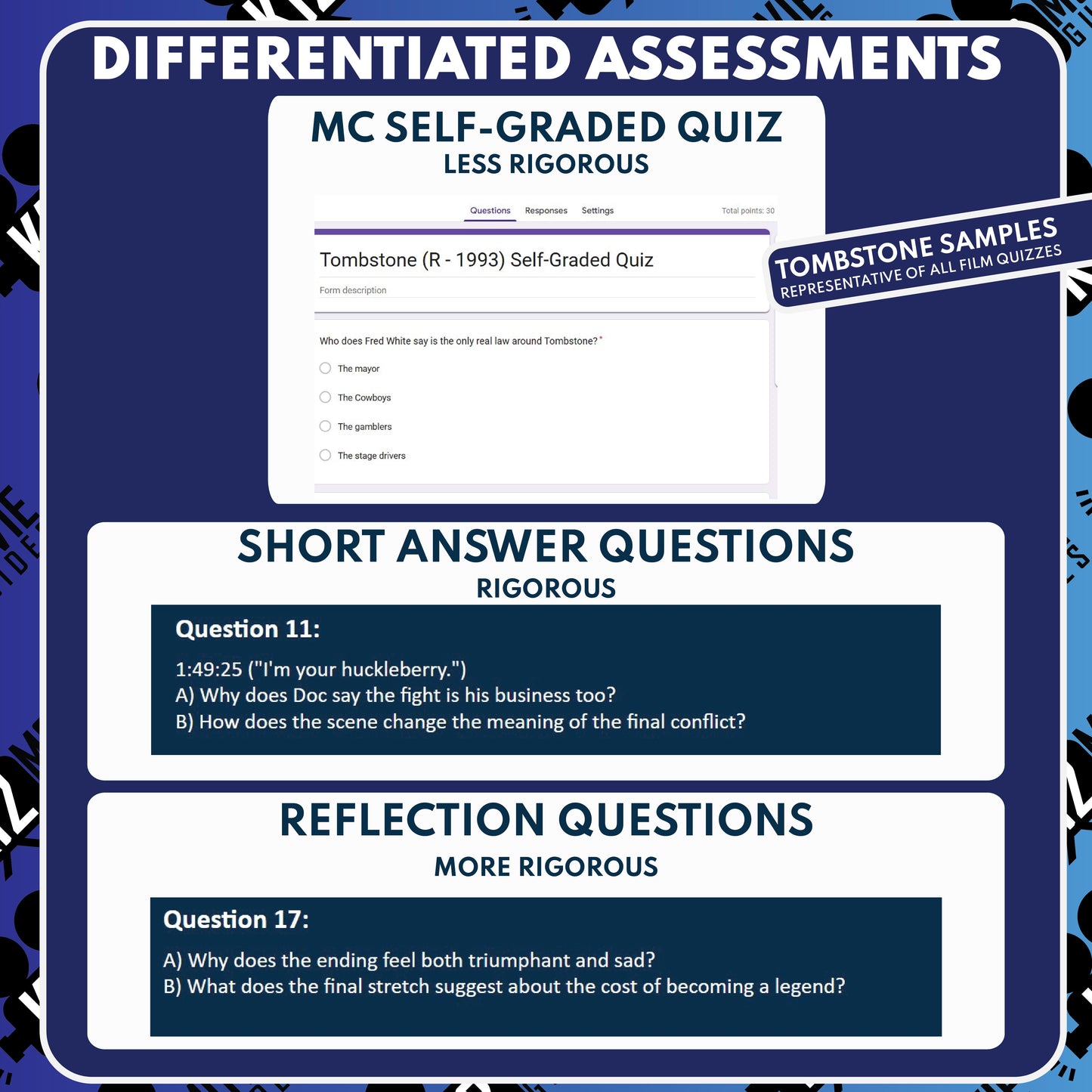
Check the thumbnail images for sample questions to see if this movie guide is suitable for your students.
Will this lesson meet your needs?
Download one first for FREE Tombstone Film Quiz
Note: The sample thumbnails for this product are from Tombstone Film Quiz but they are representative of what is included in this Film Quiz.
Film Summary:
When drought-stricken rancher Dan Evans agrees to help escort captured outlaw Ben Wade to the 3:10 train to Yuma, a money problem becomes a test of nerve. The film follows Dan through fear, community failure, family pressure, and Wade's constant attempts to talk his way free, building a Western about conscience and courage as much as pursuit.
Parental Guidance:
IMDb Title: https://www.imdb.com/title/tt0050086/
IMDb Parental Guide: https://www.imdb.com/title/tt0050086/parentalguide/
Classic black-and-white Western. Teachers can expect stagecoach robbery, gun violence, threat, alcohol/saloon scenes, and sustained suspense, with little profanity or explicit content.
Perfect For:
- Classic Western study
- ELA
- Substitute plans
- Media literacy
- Character analysis
- Suspense study
- Classes discussing justice
- Temptation
- Family responsibility
- Courage under pressure
Skills Addressed:
- Character motivation
- Cause and effect
- Dialogue-based inference
- Suspense analysis
- Theme tracing
- Vocabulary in context
- Using scene evidence to explain moral choice and changing relationships
What's Included:
Student Materials
- Rigorous Short Answer Questions (chronological, time-stamped)
- End-of-Film Reflection & Challenge Questions
- 30 Question MC Quiz (Self-Graded Google Forms)
Teacher Materials
- Teacher's guide and lesson plan
- Worksheet & MC Quiz answer key
- CCSS alignment
- Pre- and post-movie discussion questions
- 3-day, 4-day, and 5-day pacing options
- Admin movie request and parent/guardian permission slip materials
Digital & Print Options
- All materials have Google Classroom and Print Options
Flexible Lesson Pacing
- 3-Day Sprint: best for tight schedules or classes that do better with smooth viewing and discussion after the film
- 4-Day Flexible Plan: best for teachers who want either discussion before and after the film or selected pause-and-write checkpoints during viewing
- 5-Day Full Week: best for classes that need more guided discussion and writing time in class, with less take-home work
The teacher guide includes these pacing paths, plus options for written responses or the multiple-choice quiz as an alternate assessment.
(Note: All files formatted for seamless upload to your Google Drive if desired.)
Time & Tech:
Runtime: 92 minutes. Designed for before, during, and after viewing, with print and digital materials plus a Google Forms self-grading multiple-choice option.
DISCLAIMER: This product is an independently created worksheet and question set for classroom commentary and instruction. It is not affiliated with the film's creators or distributors, and it does not include the movie itself. Teachers should preview films for local policy fit.
Share